
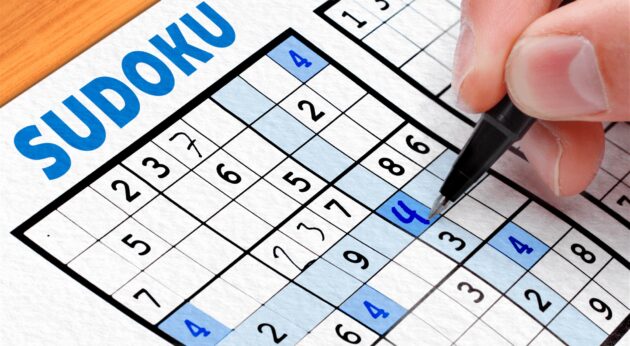
I didn’t start playing puzzle games to become smarter or more disciplined. Honestly, I started because I was bored. Really bored. One of those days when time feels heavy, your brain feels noisy, and nothing seems interesting enough to hold your attention. I didn’t know it then, but that simple decision would quietly change how I spend my downtime—and how I approach challenges in general.
It was late evening, the kind where everything feels unfinished but you’re too tired to start anything new. I had already scrolled through social media more times than I’d like to admit. Videos blurred together, posts felt repetitive, and my brain felt overstimulated yet unsatisfied.
Out of habit, I opened a puzzle app I hadn’t touched in weeks. A grid appeared. No flashy animations. No music. Just numbers and empty squares. I sighed, unsure why I even bothered.
Then I started filling it in.
Sudoku has a strange way of demanding attention without shouting for it. The rules are simple, almost boring on paper. Fill each row, column, and box correctly. That’s it. Yet once you start, your brain locks in.
What surprised me most was how quickly the noise in my head disappeared. No multitasking. No background distractions. Just logic, patterns, and careful thinking. I wasn’t rushing. I wasn’t stressed. I was present.
That felt rare.
About halfway through that puzzle, I hit a wall. The easy numbers were gone. Every empty square looked equally possible and equally impossible. I stared at the grid, hoping something obvious would jump out.
Nothing did.
Old habits kicked in. I wanted to rush. I wanted to guess. I wanted to be done. But guessing had betrayed me too many times before. So instead, I slowed down. I scanned each row. Then each column. Then each box. Again. And again.
Five minutes passed. Then ten.
And then—finally—one number revealed itself. Just one. But that single placement unlocked several others. The grid started to breathe again.
That moment reminded me of something important: slowing down isn’t wasting time. Sometimes, it’s the only way forward.
Playing Sudoku is never emotionally neutral. There are moments of confidence where everything clicks. You feel sharp, capable, almost brilliant. Then, without warning, you’re stuck again, questioning your logic and your patience.
I’ve laughed at my own mistakes more times than I can count. Like the time I spent twenty minutes building a perfect solution—only to realize I had duplicated a number early on. Or the time I accused the puzzle of being broken, only to discover the error was mine all along.
Frustrating? Yes. But also oddly funny. The game has a way of keeping your ego in check.
I didn’t decide to make Sudoku a habit. It just happened.
Morning coffee became puzzle time. Waiting rooms became puzzle time. Even short breaks during the day felt incomplete without opening a grid and making a bit of progress.
What I liked most was that I could stop anytime. There was no penalty for walking away. The puzzle waited patiently for my return, exactly as I left it.
In a world that constantly demands urgency, that patience felt refreshing.
Over time, I realized that enjoying Sudoku had less to do with skill and more to do with approach.
Keeping track of options helps prevent careless mistakes and reduces mental clutter.
I now double-check rows and columns before placing a number. It saves time in the long run.
Some puzzles don’t move quickly. Accepting that fact makes the process far more enjoyable.
Taking breaks isn’t failure. It’s strategy.
I didn’t expect a puzzle to teach me anything about life, but here we are. Sudoku quietly trained me to tolerate uncertainty. To sit with problems without immediately solving them. To trust that clarity comes with patience.
I’ve noticed myself applying that mindset elsewhere—at work, in planning, even in conversations. Instead of rushing to conclusions, I pause. I scan the situation. I wait for the missing piece.
That’s a powerful habit to develop.
Finishing a challenging puzzle never feels loud or dramatic. It’s subtle. I usually sit back, breathe out, and smile to myself. No celebration needed.
There’s pride in knowing that every number has a reason, every square belongs where it is, and nothing was forced. The grid feels balanced. Complete.
That feeling is deeply satisfying.
After so many puzzles, I still choose Sudoku because it gives me something rare: focused calm. It doesn’t demand speed. It doesn’t overwhelm. It simply invites you to think.
Some days, I finish quickly. Other days, I struggle. Both experiences feel worthwhile. Each puzzle meets me exactly where I am mentally—and challenges me just enough.
Sudoku may look like a simple number game, but it offers something deeper. It teaches patience, rewards attention, and encourages slow thinking in a fast world.
December 19, 2025
0
Virtual
Javier Hodge
Email
#TheDayaPuzzleTaughtMeHowtoSlowDown


Kompster is a directory and marketplace for competitions, races, challenges & championships.
We're building the World's Largest Repository of Competitions, right here on the web. Join us!
Browse Competitions or List an EventKompster.com - The World of Competition