
Sometimes the best hobbies are the ones you never planned to start. They sneak into your routine quietly, almost by accident, until one day you realize you can’t imagine your day without them.
For me, that unexpected hobby turned out to be Sudoku.
At first glance, it’s just a grid of numbers. Nothing flashy. No storylines, no characters, no dramatic sound effects. Yet somehow, this simple puzzle has become one of my favorite ways to relax and challenge my brain at the same time.
If you had told me a few years ago that I’d enjoy spending my free time staring at number grids, I probably would have laughed. But here we are.
The first time I tried this puzzle, I honestly had no idea what I was doing.
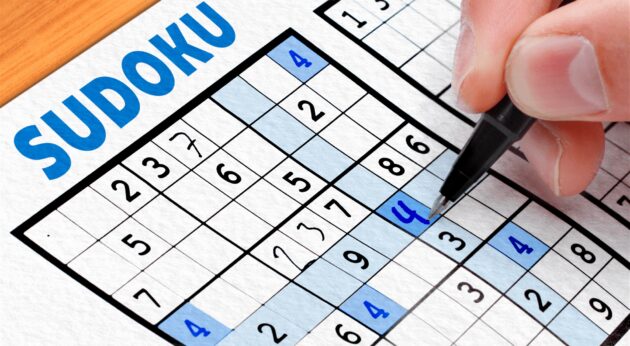
I remember opening the puzzle and seeing the classic 9×9 grid filled with scattered numbers. Some squares had numbers already placed, while others were completely empty.
My first thought was: This looks like math homework.
And if you’re anything like me, that’s not exactly an exciting first impression.
But after reading the instructions, I realized something important: this puzzle isn’t about math at all. There are no calculations or formulas involved.
Instead, it’s all about logic.
Each row, column, and 3×3 box must contain the numbers 1 through 9 exactly once.
That’s the entire rule.
Simple in theory… but surprisingly tricky in practice.
Like most beginners, I struggled during my first puzzle.
At the beginning, the grid looked like chaos. Numbers seemed randomly placed with no clear starting point.
But then I noticed something small.
One row already had eight numbers filled in.
That meant only one number was missing.
I checked which numbers were already there and figured out which one had to go in the empty space.
When I placed it correctly, the puzzle suddenly felt less intimidating.
It was like discovering the first clue in a mystery.
After that first breakthrough, things started moving faster.
Filling in one number made another space easier to solve. That new number unlocked another possibility somewhere else on the grid.
Piece by piece, the puzzle began to unfold.
By the time I filled in the last square, I felt a weird sense of accomplishment.
Not a huge celebration—but a quiet, satisfying “Yes, I did it.”
There are many games out there that are louder, faster, and more visually exciting.
But this puzzle offers something different.
In many modern games, speed is everything.
But here, rushing doesn’t help.
If you hurry, you’ll probably place the wrong number and create a bigger problem later.
The best strategy is simply slowing down and thinking carefully.
And in a world where everything feels rushed, that’s actually refreshing.
Every puzzle is like a small investigation.
You examine the evidence—the numbers already placed on the grid.
Then you eliminate possibilities until only one answer remains.
That process of reasoning makes each correct move feel earned.
Of course, not every puzzle session is peaceful and smooth.
Sometimes things get frustrating.
You might reach a point where the puzzle seems impossible.
You check every row.
Every column.
Every little box.
But nothing stands out.
It feels like staring at a locked door without knowing where the key is.
Those moments can be annoying—but they’re also part of the challenge.
Sometimes the problem isn’t the puzzle.
It’s me.
I’ve had plenty of moments where I confidently placed a number earlier… only to realize ten minutes later that it caused everything else to break.
Rows start repeating numbers.
Columns stop making sense.
At that point, I usually sigh, undo several moves, and try again.
It’s frustrating—but also a little funny.
March 26, 2026
Virtual
#WhyaSimpleNumberPuzzleBecameMyFavor...


Kompster is a directory and marketplace for competitions, races, challenges & championships.
We're building the World's Largest Repository of Competitions, right here on the web. Join us!
Browse Competitions or List an EventKompster.com - The World of Competition